
Heritage · Since 1848
175 years of getting it exactly right.
A British tradition of precision instruments, military navigation and specialist optical engineering.
1848
Founded, Clerkenwell
175+
Years of instrument making
1961
Edenbridge, Kent
50+
Years of M-73 service
Timeline
From workshop to systems.
1830
Ross of London.
Andrew Ross founds what becomes a significant British lens and optical-instrument name — later part of the wider Pyser story.
1848
Francis Barker & Son.
Compass and scientific instrument making begins in Clerkenwell, London. The central thread of Pyser heritage.
1852
J. H. Steward.
A London optician supplying instruments for surveying, reconnaissance, signalling and gun laying.
1903–1916
Patterns that defined the field.
Barker's Royal Geographical Society pattern (1903), service liquid prismatic designs (1910) and lensatic patterns (1916).
1914–1945
Two world wars.
Barker military compass patterns — the Mk II (1930), Mk III (1932) and the 1942 pattern — serve British forces through both conflicts.
1961
Edenbridge, Kent.
Francis Barker manufacturing relocates to Edenbridge — the home of Pyser operations ever since.
1960s–90s
Great names, one group.
Francis Barker, J. H. Steward, Ross of London, Leach Optical and Newbold & Bulford are drawn together under Survey & General Instrument Co.
1973
The M-73.
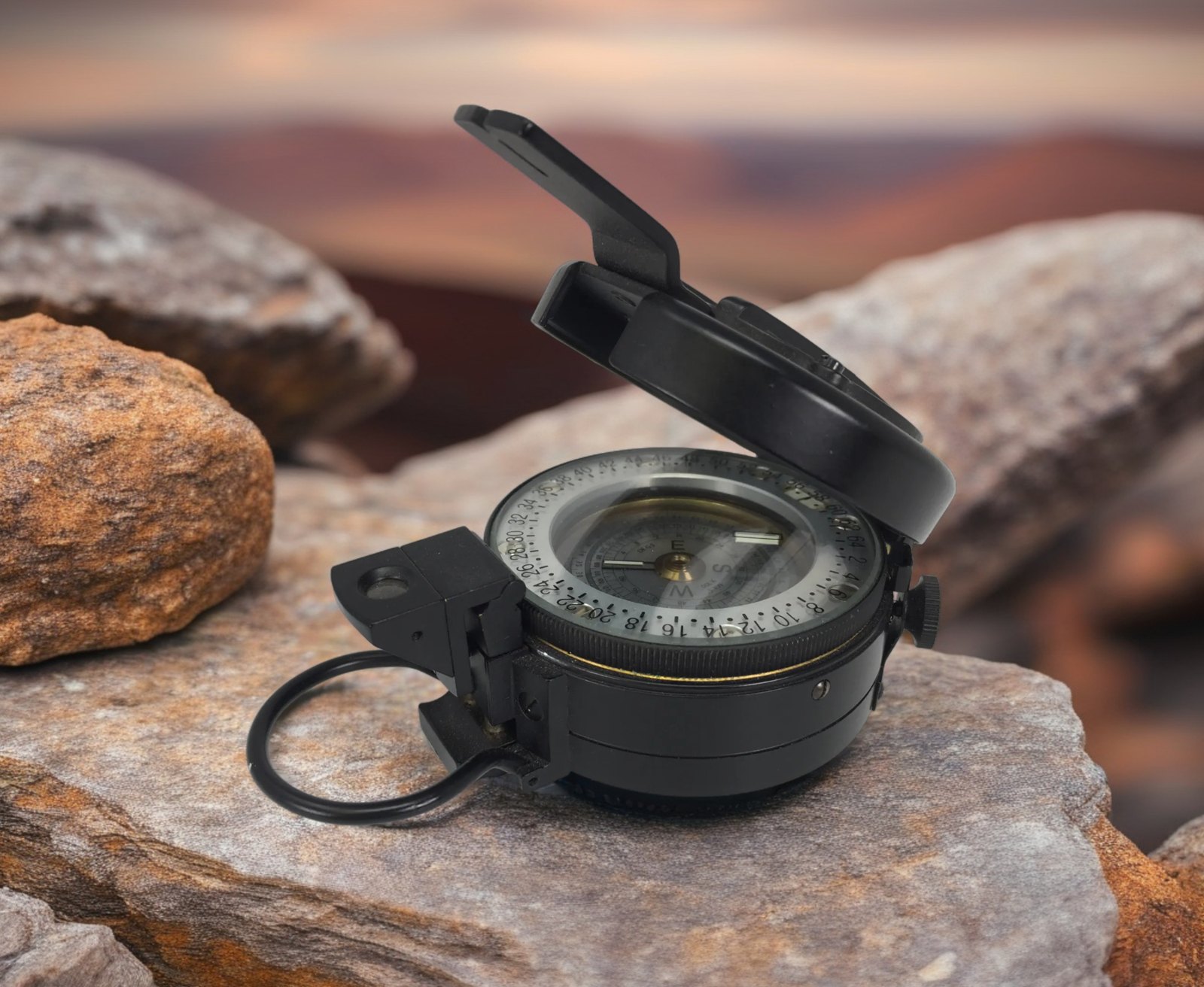
One of the best-known British military prismatic compasses. Liquid damped, five tritium sources, sapphire bearing. Still in production.
1988
The M-88.
The line extends in lightweight aluminium alloy — same standard, 125 grams.
1997
Graticules joins.
Precision optical-marking heritage dating to 1914 joins Pyser-SGI.
2015
Pyser Optics.
The trading identity becomes Pyser Optics: night vision, thermal imaging, binoculars and weapon-zeroing optics.
2023
Fifty years of M-73.
Half a century in service. Still true north.
Next
Pyser Systems.
Optics and unmanned systems under one standard of precision. Seeing first, and now reaching further.
The names behind the heritage
Francis Barker & Son
1848
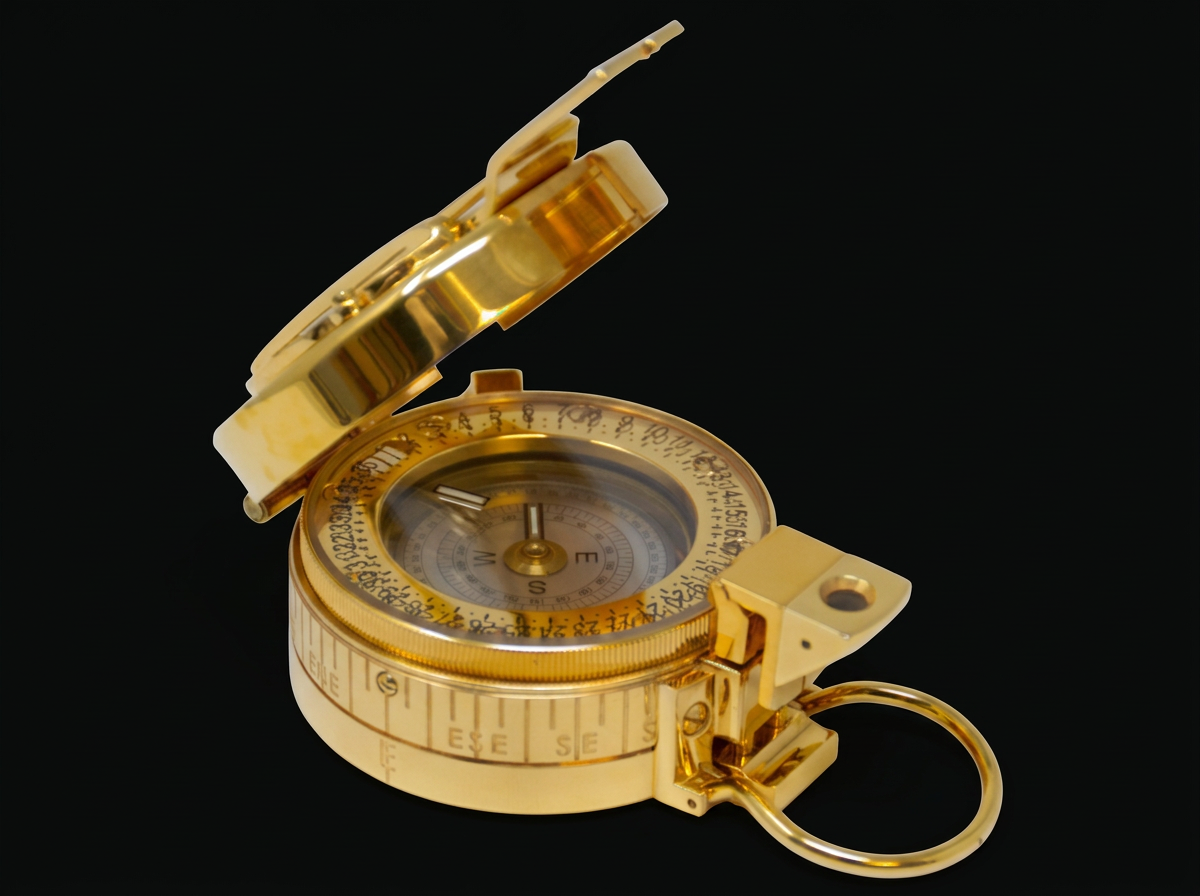
The defining thread. Compasses for navigation, surveying, exploration and service — from Victorian brass to the M-73 and M-88.
Ross of London
1830
High-quality lenses, photographic optics and optical instruments, founded by Andrew Ross.
J. H. Steward
1852
Victorian optician and instrument maker for reconnaissance, night marching, signalling and gun laying.
Newbold & Bulford
—
Binoculars, telescopes and scientific instruments. Proof of the breadth of the British optical trade.
Graticules
1914
Julius Rheinberg's precision optical graticules for British government work. Joined Pyser-SGI in 1997.
M-73 · The bridge
No satellites. No software. No batteries.
Magnetic navigation doesn't depend on positioning signals, data links or a powered display. That's why a 1973 design still sits beside the most advanced sensors in the field — and why we still make it in the UK.